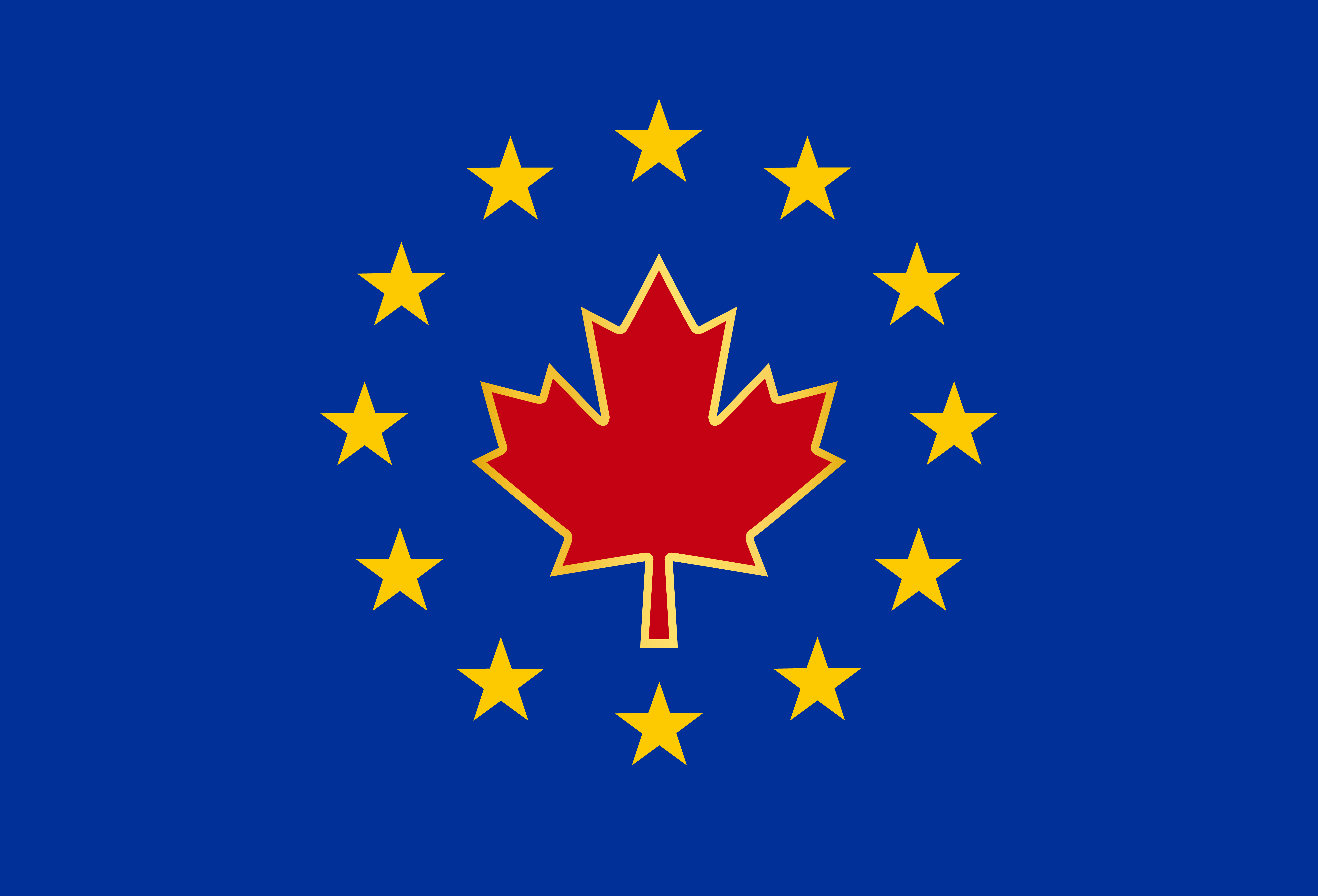
Canada’s proposed “associate membership” of the European Union (EU) establishes no requirement to adopt the euro. The proposal’s terms remain unsettled. Rules about euro adoption by EU member states should not be treated as automatic conditions for Canada’s proposed association.
Canada currently has a floating dollar: its exchange rate can rise or fall. It also sets its own monetary policy, including interest-rate decisions aimed at keeping inflation stable. The Bank of Canada explains that framework. A speech supporting closer relations does not itself change it.
Association, EU membership and the euro differ
Association is a relationship whose terms must be defined. Article 217 of the EU’s functioning treaty allows association agreements with countries outside the Union. It does not prescribe a Canadian currency arrangement.
EU membership is membership of the Union itself. Canada’s current associate-member discussion should not be treated as a settled application to join as a member state. Our guide to the proposal explains the distinction.
The euro area consists of EU countries that use the euro. The Commission’s euro-adoption guidance explains that EU member states, apart from Denmark’s exemption, are required to adopt it once the conditions are met. It also explains that there is no fixed timetable.
These are not three automatic steps that the Canadian proposal has set in motion.
What has actually been said about Canada?
Ursula von der Leyen proposed associate membership on 16 September 2026. The Commission’s 18 September briefing described the concept as still being defined.
Those checked statements do not establish a Canadian obligation to adopt the euro. That is a limited conclusion about the available proposal. It is not a prediction of every term that might be discussed later.
Even for EU member states, adopting the euro involves conditions and a formal decision. Article 140 sets out assessments and decision procedures. It does not make a political endorsement of closer ties a currency-change mechanism.
Paying in euros is not adopting the euro
An existing Canadian agreement offers a useful example. Canada’s EU programme-participation agreement provides for relevant payments in euros under Article 6(11).
That payment rule operates alongside Canada’s own currency framework. It demonstrates why a financial contribution measured or paid in euros should not be described as replacing the Canadian dollar.
The distinction would matter in any future proposal too. Readers should ask whether a clause governs a particular payment or the country’s monetary system. Those are very different commitments.
What would a shared currency change?
A common currency can remove currency-conversion costs between its users and eliminate exchange-rate changes between those currencies. The EU’s explanation of euro benefits describes those mechanisms.
The trade-off would include giving up a separate national monetary policy. Canada’s present floating exchange rate allows the dollar’s value to move. The Bank of Canada’s exchange-rate explanation describes its role in the Canadian framework.
These points explain what a currency choice involves. They do not predict Canadian savings, interest rates, prices or overall gains. No agreed Canadian currency package supports such estimates here.
What evidence would change the answer?
A future legal text could clarify currency-related commitments. Until one does, neither compulsory euro adoption nor a permanent guarantee about all future terms can be inferred.
The immediate question is narrower: has the proposed association created a euro requirement? In the official material checked for this article, it has not. The current Canada–EU relationship contains separate agreements with defined purposes; closer cooperation should be read through their actual terms. Follow the Canada–EU Relations Tracker for confirmed developments.
Leave a Reply