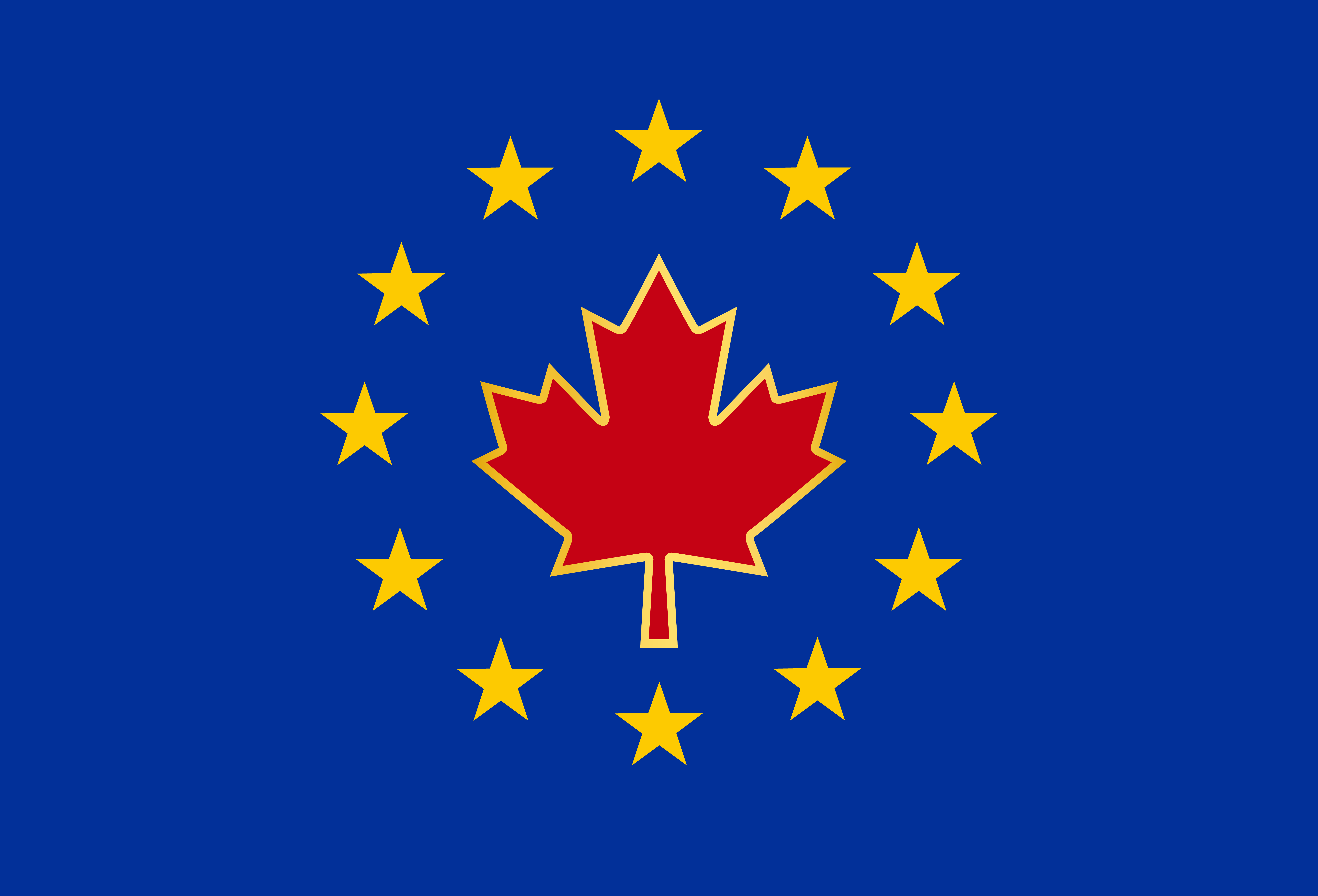
Canada & the EU
As of 20 September 2026.
Canada and the European Union (EU) already work together on trade, research, diplomacy and defence. Each agreement has its own rules. These arrangements are separate from the new proposal for Canadian “associate membership.”
Trade and political cooperation
The Comprehensive Economic and Trade Agreement (CETA) covers much of the trade relationship. It was signed on 30 October 2016. Agreed parts began operating on 21 September 2017, before all steps for full approval were complete. This is called provisional application. CETA has not yet fully entered into force, according to the Council’s treaty record.
The Strategic Partnership Agreement covers broader political cooperation. It was also signed on 30 October 2016. Its provisional application began on 1 April 2017. Its full approval process also remains incomplete. See the separate partnership treaty record.
According to Global Affairs Canada, trade in goods and services with the EU’s 27 countries totalled C$178.6 billion in 2025. The department ranks the EU, taken as a bloc, as Canada’s second-largest trading partner after the United States.
Research
Canada became associated with Pillar II of Horizon Europe on 3 July 2024. Horizon Europe is the EU’s research programme; Pillar II is one part of it. Eligible Canadian researchers and organisations can join projects in that part on broadly the same terms as EU participants. This does not give Canada the same status across the whole programme. The European Commission explains the scope and eligibility rules.
Defence
Canada participates in selected projects under Permanent Structured Cooperation (PESCO), an EU defence framework. It joined Military Mobility in 2021. Participation in the Network of Logistic Hubs was authorised in 2023. The Canada–EU Security and Defence Partnership records this cooperation.
The Canada–EU agreement on Security Action for Europe (SAFE) entered into force on 1 August 2026. It gives eligible Canadian companies and products access to certain defence purchases supported by SAFE, subject to conditions. This differs from the SAFE loans available to EU member states. See the entry notice, Canadian participation rules and SAFE regulation.
Rules and future proposals
CETA also provides for voluntary cooperation on regulation. Each side keeps its ability to regulate; cooperation does not make their laws identical.
On 16 September 2026, European Commission President Ursula von der Leyen proposed Canada as the EU’s first associate member. On 18 September, the Commission said the concept was still being defined with member states and Canada. Its future terms should not be confused with the arrangements already operating.